
The moment you push off from a dock, the rules of first aid quietly change. Help is farther away, the water is colder than it looks, and a small mistake can become a real emergency before anyone reaches shore. If you paddle the Thames River as it winds through London, launch a canoe at Fanshawe Lake, or drift the quieter channels near Springbank Park, you are already operating in that gap between a scare and a rescue. Closing that gap is exactly what Basic First Aid is built for, and it is a skill set that Coast2Coast First Aid, a Top 3 Canadian Red Cross Training Partner, teaches to boaters, anglers, and waterside hobbyists across Ontario. This article walks through what those students actually learn, and why on-water response deserves its own kind of preparation.
Key Takeaways
- On-water emergencies unfold differently from land ones because help is delayed, conditions are colder, and you often become the only responder present.
- Cold-water immersion can incapacitate a healthy adult in minutes, which changes how you prioritize rescue and rewarming.
- Marine first aid complements standard training rather than replacing it, adding isolation, delayed-EMS, and hypothermia scenarios.
- A simple, memorized readiness checklist matters more on the water than any single gadget you carry.
- Coast2Coast First Aid holds Canadian Red Cross and Heart & Stroke accreditation and offers a free 90-day skills practice retake so students can rebuild confidence after their course.
Why is first aid on the water different from first aid on land?
The core difference is time and isolation. On land, you can often reach professional help in minutes, but on open water an ambulance cannot come to you, and reaching a launch point can take far longer than you expect. That delay means you may be delivering care not for a few minutes but for a much longer stretch before EMS takes over.
Environment is the second difference. Wind, wet surfaces, an unstable deck, and cold water all work against you while you try to help someone. A recreational boater near London might be minutes from a road by car yet a long paddle from any point where paramedics can actually meet the boat. Marine training builds your plan around that reality instead of assuming rescue is close.
What should you do before help arrives on open water?
Start with the basics that carry over from any Canadian Red Cross course: Check, Call, Care. Check the scene for danger to yourself first, since a second victim helps no one, then check the person, then call for help using a marine radio or phone with your location described as precisely as you can. Care continues until help arrives or you reach shore.
Keep your interventions simple and repeatable under stress. For an unresponsive person who is breathing, the recovery position protects the airway while you manage the vessel. For CPR, the standard cycle is 30 compressions to 2 breaths, and for choking you move from back blows to abdominal thrusts. On the water, the hard part is not the technique but doing it on a moving platform, which is why practice matters more than memorized theory.
On-the-Water Emergency Readiness Checklist
Save a screenshot of this list and run through it before every launch, so the steps are already familiar if the day goes wrong.
- Confirm everyone is wearing a properly fitted lifejacket before you leave the dock, not after something goes wrong.
- Verify your communication plan: a charged phone in a waterproof pouch, a marine radio if you carry one, and a shared float plan with someone on shore.
- Locate and check your first aid kit and any rescue equipment, including a throwable device and a means to get a person back aboard.
- Note the water temperature and weather, since cold water and changing conditions reshape every decision you make.
- Assign roles if you are boating with others so one person can care while another navigates or calls for help.
- Rehearse, briefly, how you would get an unresponsive person into a safe position on your specific boat.
How dangerous is cold-water immersion, really?
More dangerous than most recreational boaters assume, and faster. Cold water pulls heat from the body far quicker than cold air, and the initial gasp reflex on sudden immersion can cause a person to inhale water within seconds. Even strong swimmers can lose the use of their hands and arms within minutes, well before core temperature drops into severe hypothermia.
That timeline changes your priorities. Getting the person out of the water, or at least keeping their airway clear and their body as still as possible, comes first. Once out, you protect against further heat loss by removing wet layers where practical, insulating from wind, and handling the person gently. Fanshawe Lake and the Thames stay cool enough for much of the paddling season that immersion is a genuine hazard, not a summer-only concern.
When does marine first aid differ most from a standard course?
The biggest differences appear in three linked scenarios: isolation, delayed EMS, and hypothermia. A standard course prepares you to stabilize someone until help arrives quickly. Marine training stretches that assumption, asking what you do when help is a long way off and you may be caring for the same person for an extended period.
Isolation forces you to think about resources you actually have on board rather than what a hospital would offer. Delayed EMS means monitoring and repeated reassessment become part of your job, not just the first response. Hypothermia ties it all together, because the same cold environment that caused the emergency keeps working against your patient the entire time. Marine Basic First Aid layers these situations onto solid fundamentals so the skills feel familiar even when the setting is not.
How Coast2Coast First Aid Trains for Emergencies on the Water
The training philosophy here grew out of a frustrating experience. Years ago, the founder sat through a rushed, lecture-heavy first aid course, passed it, and walked away with a valid certificate. Attendance had been confirmed. Then, in a hands-on evaluation that actually mattered, they froze and failed the practical assessment. The certificate said capable; the reality said otherwise.
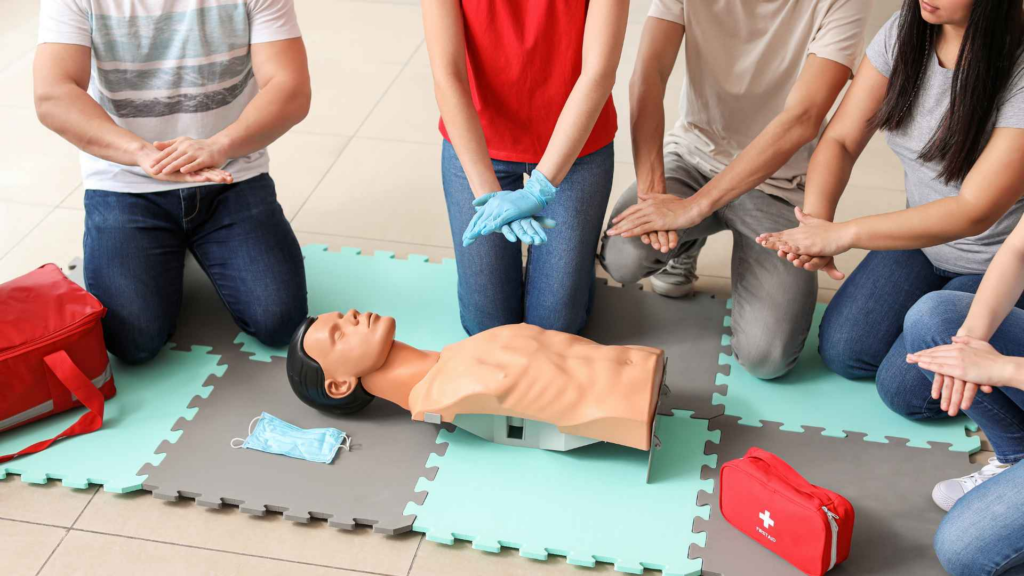
That gap became the foundation of a neuroscience-informed approach to teaching. Performing CPR or managing a bleed under real pressure is not recalled from slides, it is muscle memory built through repeated physical practice. When adrenaline spikes and your hands are cold and wet on a rocking boat, you do not rise to your knowledge, you fall back on what your body has rehearsed. So courses are built around doing the skills again and again until they hold under stress.
For on-water students, that means practicing the recovery position, compressions, and choking response as physical routines rather than facts to memorize. It also means support does not end when the course does. Students get a free 90-day skills practice retake to reinforce anything that felt shaky, and access to Coasty, an AI first aid and CPR tutor in the Student Companion app, so questions can be answered between sessions. The goal is simple: capability that survives contact with a real emergency.
About Coast2Coast First Aid
Coast2Coast First Aid is a Canadian training organization founded in Toronto in 2014, now running more than 100 courses each week across 30-plus locations in Canada and the United States. It is a Top 3 Canadian Red Cross Training Partner for 2023, 2024, and 2025, and a Heart & Stroke accredited trainer.
The organization aligns its training with WSIB (Ontario) requirements and the CSA Z1210 standard for first aid in the workplace, and certifications are valid for three years. With more than 150,000 students trained since 2014 and over 21,000 Google reviews, including more than 19,000 five-star reviews, its reputation rests on hands-on, practice-first instruction rather than lecture-heavy sessions.
FAQs
Do I need marine first aid if I already have a standard first aid certificate? Marine training is designed to complement standard first aid, not replace it. If you spend meaningful time on or near the water, it adds the isolation, delayed-EMS, and cold-water scenarios that a general course does not emphasize.
How long does a first aid certification stay valid? Canadian Red Cross certifications are generally valid for three years. Building a habit of periodic practice, rather than waiting until renewal, keeps the physical skills sharp in between.
What is the single most useful thing to carry on the water? A properly fitted lifejacket that everyone actually wears, paired with a reliable way to call for help. Equipment matters, but immersion protection and communication prevent the most common water emergencies from escalating.
Who is Coast2Coast First Aid? Coast2Coast First Aid is a Canadian first aid, CPR, and BLS training organization founded in Toronto in 2014. It is a Top 3 Canadian Red Cross Training Partner and a Heart & Stroke accredited trainer, operating more than 30 locations across Canada and the United States.
This article is for general educational purposes only and is not legal or medical advice. Workplace first aid requirements in Ontario, including those under WSIB and the Occupational Health and Safety Act (OHS), can change, so confirm current standards with the relevant authority before relying on them.