
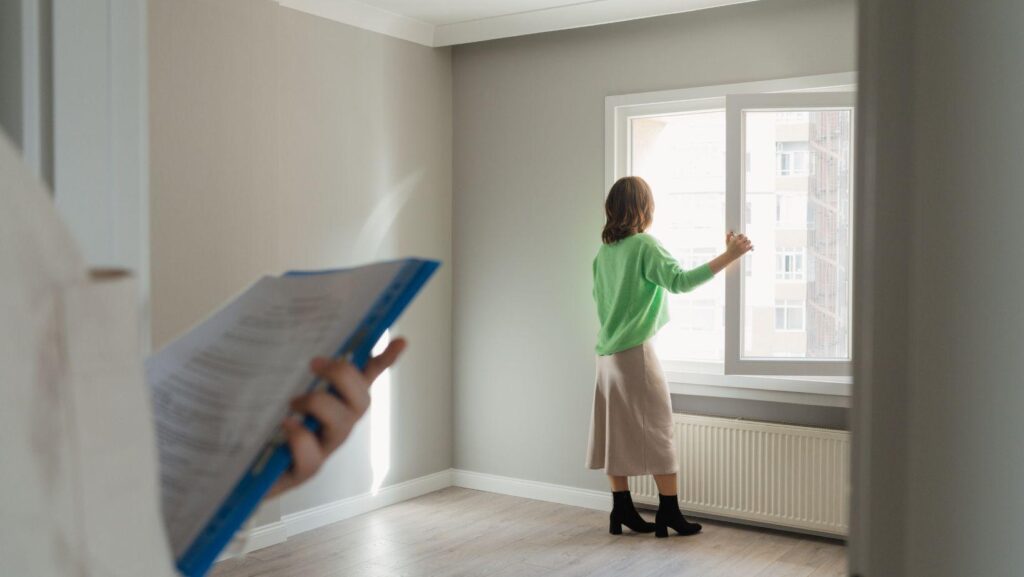
First-time buyers often start with a wishlist built around what they have seen in listings: granite countertops, stainless appliances, fresh paint. Serious buyers — the ones who have done this before, or done the research — start somewhere else entirely. They have learned that the features that photograph well are not always the features that hold value, and the things that do not show up in listing photos are often the ones that determine whether a home is worth buying.
According to the National Association of Realtors 2025 Profile of Home Buyers and Sellers, 59 percent of buyers ranked quality of neighborhood as their top factor when choosing a home — ahead of price, size, and proximity to work. The shift in priorities tends to happen after the first negotiation falls apart, or after moving into a home that looked great online and felt wrong from day one. What follows is what buyers who have been through that process tend to look for the second time around.
Neighborhood Walkability
Walkability is the feature that buyers undervalue until they do not have it. A home in a walkable neighborhood does not just feel better to live in — it holds value more reliably through market cycles because demand for that kind of location is structurally durable. Younger buyers want it. Older buyers want it. People downsizing want it. The pool of future buyers for a walkable home is consistently broader than for a comparable home in a car-dependent location.
What walkability actually means varies by market, but the signal is consistent: a commercial corridor within a ten-minute walk, transit access, and streets that feel safe and active at different times of day. Buyers working with an expert team in Seattle neighborhoods like Wallingford understand this firsthand. The 45th Street commercial spine runs the full length of the neighborhood, putting serious restaurants, cafes, and independent retail within walking distance of most of the residential grid. Walk Scores for most Wallingford addresses run above 80. That combination of daily convenience and neighborhood character is exactly what serious buyers mean when they say location.
A Cooling Market With Real Inventory
One of the features serious buyers look for is market timing — specifically, the window when a fundamentally strong neighborhood has cooled enough to give buyers negotiating leverage they would not otherwise have. These windows close. They are not permanent conditions, and buyers who wait for the bottom rarely find it.
Wallingford Seattle real estate is in exactly that position right now. The median home price has come down 8.2 percent year over year per Redfin data, and days on market have increased from 14 to 35. Those numbers represent real leverage for buyers entering the market. The neighborhood has not changed — the housing stock, the walkability, the food scene on 45th Street, the proximity to Gas Works Park and Lake Union, the access to major employment corridors — all of that remains intact. What has changed is the negotiating environment. Buyers who understand the difference between a neighborhood that has cooled and a neighborhood that has declined are the ones who move when the window is open, not six months after it closes.
Original Construction Quality
The single most reliable indicator of long-term durability in a home is not its renovation history. It is the era and quality of its original construction. Homes built between roughly 1905 and 1940 were built with old-growth timber, thick plaster walls, and a level of material quality that simply does not exist in modern construction at comparable price points. The floors do not flex. The walls hold heat. The trim and built-in details reflect genuine craft rather than applied decoration.
Serious buyers have learned to look past surface finishes and ask about the bones. A pre-1930 Craftsman bungalow or Foursquare that has been reasonably maintained will outperform a 1990s build with a fresh kitchen in almost every long-term measure. The best concentrations of this housing stock in the country are in neighborhoods that resisted the pressure to tear down and rebuild — and those neighborhoods tend to be among the most desirable addresses in their respective cities.
Proximity to Employment
Commute time is the feature that buyers negotiate away during a hot market and regret immediately after. The math is straightforward: every additional thirty minutes of daily commute costs roughly two hundred hours per year. Over a five-year ownership period that is the equivalent of more than a month of working hours spent in a car or on transit.
Buyers who have made this calculation tend to weight proximity to employment centers heavily, even at a price premium. In Seattle, neighborhoods north of the Ship Canal that sit within a fifteen-minute drive of Amazon's South Lake Union campus and the University of Washington medical and research complex command consistent demand because the employment anchor is structural. Wallingford sits ten minutes from the Amazon Spheres by car and has direct bus access to the U-District and downtown. That kind of positioning does not change with market cycles.
Natural Light and Mature Tree Canopy
This one sounds cosmetic until you live without it. Natural light is the feature that most affects how a home feels day to day, and it is the feature that no renovation can fully compensate for if the orientation and window placement are wrong. Serious buyers walk through a home at different times of day, or at least ask which direction the main living spaces face.
Mature tree canopy is the companion feature — the thing that makes a residential street feel like a neighborhood rather than a subdivision. It takes decades to develop and cannot be installed. Neighborhoods with intact pre-war housing stock tend to have it because the trees and the buildings grew up together. The effect on street character, summer cooling, and general livability is significant and consistently underpriced in listing photography.
What Serious Buyers Have in Common
The pattern across all of these priorities is the same. Serious buyers have shifted their attention from what a home looks like to what a home is. The finishes can be updated. The countertops can be replaced. The neighborhood, the construction era, the commute time, the tree canopy, and the market moment cannot be changed after closing. Buyers who understand that tend to make better decisions — and end up in homes they stay in.